

From Emotional Patterns to Personal Freedom: How to Stop Repeating What No Longer Serves You

Have you ever promised yourself that next time you would react differently, only to find yourself doing exactly the same thing again?
Perhaps you promised yourself you would stop worrying about what other people think.
You would finally say no without feeling guilty. You would stop overthinking every conversation, replaying past mistakes, or imagining everything that could go wrong.
And yet, when the moment comes, something familiar takes over.
You say yes when you want to say no.
You stay silent when something matters to you.
You put someone else's needs before your own, even when you are exhausted. Or you find yourself trapped in a cycle of thoughts that leaves you feeling anxious, frustrated, or disappointed in yourself.
Then comes the question: Why do I keep doing this when I know it doesn't make me happy?
The answer may have less to do with a lack of willpower and more to do with the emotional patterns you have learned throughout your life.
The good news?
You may not have chosen the patterns that shaped you, but you can learn to respond to them differently.
And that is where personal freedom begins.
1. The Invisible Patterns That Influence Your Life
We all develop emotional patterns.
Throughout our lives, we have experiences that influence how we see ourselves, other people, and the world around us.
Our family environment, relationships, cultural expectations, disappointments, and significant life events can all contribute to the beliefs and responses we develop.
Perhaps you learned that keeping everyone happy was the best way to avoid conflict. Maybe you discovered that being strong meant hiding your feelings.
You might have learned that making mistakes led to criticism, so you became someone who constantly tries to get everything right.
Over time, these responses can become automatic.
You may find yourself apologising when you have done nothing wrong, feeling responsible for other people's emotions, or believing that you must work harder to be worthy of love and appreciation.
These patterns often begin as ways of adapting to our circumstances. At some point, they may have helped us feel accepted, safe, or connected.
But something that once helped us cope can eventually limit how we live.
A pattern can become so familiar that we mistake it for our personality.
We say, "That's just who I am. I'm a worrier. I'm a people-pleaser. I always put others first."
But what if these are not fixed parts of who you are? What if they are learned responses that you can begin to understand and change?
You are more than the ways you learned to cope.
2. Why Do We Keep Repeating the Same Emotional Patterns?
Understanding something intellectually does not always mean we can change it emotionally.
You might know that you don't need everyone's approval, yet still feel deeply uncomfortable when someone is disappointed in you.
You might understand that worrying about the future does not solve your problems, yet find your mind constantly searching for possible dangers.
You might recognise that a relationship is no longer healthy for you, yet struggle to establish boundaries because the thought of upsetting someone feels unbearable.
Why does this happen?
Because our emotional responses are not always the result of deliberate, conscious decisions. They can be influenced by learned associations, deeply held beliefs, habits of attention, and the ways we have come to interpret particular situations.
For example, imagine a woman who grew up believing that keeping the peace was her responsibility. As an adult, whenever someone disagrees with her, she immediately feels anxious.
She may interpret disagreement as rejection, even when the other person is simply expressing a different opinion.
To relieve her discomfort, she agrees, apologises, or abandons her own needs. The immediate tension disappears, and she feels better for a moment.
But the underlying pattern remains.
The next time someone disagrees with her, the same cycle begins again.
This is how emotional patterns can reinforce themselves: a situation triggers a feeling, the feeling influences our behaviour, and the behaviour brings short-term relief while potentially maintaining the problem.
What you avoid feeling today may continue influencing how you live tomorrow.
The goal is not to blame yourself for these responses. It is to become curious about them.
Instead of asking, "What's wrong with me?" try asking, "What is happening inside me, and what have I learned to believe about this situation?"
That question creates room for understanding rather than judgement.
3. Overthinking: When Your Mind Tries to Protect You but Keeps You Stuck
Overthinking can feel like problem-solving, but there is an important difference between the two.
Problem-solving helps you identify an issue, consider your options, and take a useful step.
Overthinking keeps you circling around the same questions without bringing you closer to a decision or a sense of resolution.
You replay a conversation, wondering whether you said the wrong thing. You imagine different outcomes before making a decision. You question your choices long after you have made them.
Sometimes, overthinking is an attempt to gain certainty in situations where certainty is impossible.
Your mind may be trying to protect you from embarrassment, rejection, disappointment, or making another mistake. It searches for the perfect answer, the safest choice, or a way to guarantee that nothing will go wrong.
But life does not offer those guarantees.
And the more you try to think your way out of every uncomfortable feeling, the more exhausted you may become.
You cannot create a peaceful life by fighting every thought that enters your mind.
Instead, you can learn to notice your thoughts without automatically believing them or acting on them.
When you catch yourself overthinking, pause and ask:
Is this a problem I can take practical action on, or am I repeating the same mental conversation?
What am I afraid might happen?
What do I actually know, and what am I assuming?
What is one useful action I can take right now?
Sometimes, the most powerful thing you can do is stop searching for another answer and begin trusting yourself to handle what comes next.
You do not need to solve every possible future before you are allowed to enjoy the present.
4. Negative Emotions Are Not Your Enemy
Many of us have learned to judge our emotions.
We tell ourselves we shouldn't feel jealous, angry, anxious, disappointed, or afraid. We compare ourselves with others and wonder why we cannot simply be happier, calmer, or more confident.
When we judge ourselves for having an emotion, we add another layer of suffering to what we are already experiencing.
Anger becomes anger followed by guilt. Anxiety becomes anxiety followed by shame. Sadness becomes sadness accompanied by the belief that we should be stronger.
But emotions are part of being human.
They can provide information about our experiences, expectations, needs, and perceptions. Anger may invite us to examine a boundary that feels crossed. Sadness may accompany a loss. Anxiety may signal that we perceive uncertainty or threat.
However, emotions are not infallible guides. Feeling rejected does not always mean someone has rejected us, and feeling afraid does not necessarily mean we are in danger.
Your emotions deserve to be understood, but they do not have to make your decisions for you.
Emotional freedom does not mean eliminating uncomfortable emotions or remaining positive all the time.
It means developing the ability to recognise what you feel, explore what may be contributing to it, and choose a response that reflects your values rather than simply reacting to the intensity of the moment.
You can feel angry without hurting someone.
You can feel afraid and still take a meaningful step forward.
You can feel guilty when setting a boundary without automatically deciding that you have done something wrong.
You can make room for an emotion without giving it control over your life.
That is emotional maturity, and it is a skill you can develop.
5. The Turning Point: From Automatic Reactions to Conscious Choices
Imagine that someone makes a comment that hurts you.
Your immediate reaction might be to defend yourself, withdraw, become angry, or replay the conversation for hours.
These responses can happen so quickly that you may not even recognise the moment when you had an opportunity to choose differently.
But with practice, you can begin creating space between what happens to you and how you respond.
That space is where change becomes possible.
Here is a simple process you can practise in everyday life.
Step 1: Notice the pattern
Begin by recognising what happens repeatedly.
Do you become defensive when someone offers feedback?
Do you agree to things you don't want to do?
Do you assume responsibility for other people's moods?
You cannot change a pattern you have not yet recognised.
Step 2: Name the emotion
Instead of saying, "I'm having a terrible day," get more specific.
Are you feeling disappointed, overwhelmed, resentful, afraid, embarrassed, or uncertain?
Naming an emotion can help you relate to your experience more clearly. You don't have to analyse everything immediately; simply acknowledging what is present is a meaningful first step.
Step 3: Explore what the situation means to you
Ask yourself what you are telling yourself about what happened.
For example, if someone doesn't reply to your message, you might think, "I've upset them," or "They don't care about me."
But those are interpretations, not necessarily facts.
Ask yourself: What evidence do I have? Is there another explanation? Does this situation remind me of something I have experienced before?
This is not about dismissing your feelings. It is about examining the story attached to them.
Step 4: Pause before reacting
Take a few slow, comfortable breaths. Feel your feet on the ground. Notice your surroundings.
If you feel overwhelmed, give yourself permission to delay your response until you feel more settled, provided the situation allows it.
You do not have to respond to every emotion immediately.
Sometimes, a pause of just a few seconds can help you choose a more considered response.
Step 5: Choose one response that supports the person you want to become
Ask yourself, "If I were responding from self-respect rather than fear, what might I do?"
Perhaps you express your opinion honestly.
Perhaps you say no. Perhaps you ask a question instead of making an assumption.
Perhaps you accept that someone may disagree with you.
The choice may feel uncomfortable at first.
That does not necessarily mean it is wrong. It may simply be unfamiliar.
Every time you practise a new response, you give yourself an opportunity to build a different habit.
Progress is not about getting it right every time. It is about becoming more aware, more intentional, and more willing to begin again.
6. Why Putting Yourself First Can Feel So Uncomfortable
For many women, particularly those who have spent years caring for their families, supporting their partners, managing responsibilities, and keeping everything together, prioritising themselves can feel surprisingly difficult.
You may have built an identity around being the reliable one, the strong one, the one who never lets anyone down.
People may appreciate you for these qualities. You may genuinely love helping others.
There is nothing wrong with generosity, compassion, or caring for the people you love.
The difficulty begins when caring for everyone else means consistently abandoning yourself.
You say yes when you are exhausted. You silence your opinions to avoid upsetting someone. You postpone your dreams because there is always something more urgent to do for another person.
And perhaps, somewhere along the way, you stop asking yourself what you actually want.
The problem is not that you care too much about others. It is that you may have learned to measure your worth by how much you give, how little you ask for, or how well you keep everyone happy.
But your needs matter, too.
You do not have to abandon yourself to prove that you love someone else.
Healthy boundaries do not mean becoming selfish or uncaring. They mean recognising that your time, energy, feelings, and needs deserve consideration.
You can love someone and still disagree with them. You can support someone without taking responsibility for every problem they face. You can disappoint another person without being a bad person.
And you can begin building a life that includes you.
Not instead of everyone else.
Alongside them.
7. Personal Freedom Begins When You Stop Living on Autopilot
When we talk about personal freedom, we often imagine changing our circumstances.
A different job. A new relationship. More money. A fresh start somewhere else.
Sometimes, external changes are necessary and deeply valuable.
But we can also carry our emotional patterns into new circumstances if we have not begun to understand them.
We may leave one relationship and repeat familiar dynamics in another.
We may change jobs but continue to fear criticism.
We may finally have more time for ourselves yet feel guilty whenever we use it for something we enjoy.
This is why inner change matters.
Personal freedom is not about controlling everything that happens in your life. It is about increasing your capacity to choose how you respond to what happens.
It is recognising that you can question a belief you have carried for years.
It is learning that discomfort does not always mean danger.
It is discovering that you can feel an emotion without becoming defined by it.
It is allowing yourself to make a decision without needing everyone's approval.
And it is understanding that the person you have been until now does not have to determine every choice you make from this moment forward.
Your past may explain some of your patterns, but it does not have to dictate your future.
You do not need to erase your history, reject the person you have been, or transform your entire life overnight.
You can begin with one moment of awareness, one different response, one honest conversation, or one boundary you have been afraid to set.
Small changes, practised consistently, can gradually change the way you relate to yourself and others.
The goal is not to become someone else.
It is to become more able to live as yourself, without being governed by patterns that no longer serve you.
8. You Don't Have to Keep Repeating the Same Story
Perhaps you have spent years trying to understand yourself.
You have read books, listened to podcasts, talked with friends, or promised yourself that things will be different next time.
And yet, some familiar reactions keep returning.
If that sounds like you, please remember this: awareness is not failure, and needing practice does not mean you are incapable of change.
Understanding a pattern is an important beginning. Learning to recognise it in the moment, respond differently, and sustain that change takes patience and practice.
You deserve to approach that process with curiosity rather than criticism.
Instead of asking, "Why am I still like this?" consider asking, "What is one thing I understand about myself today that I didn't understand before?"
Instead of judging yourself for reacting as you always have, ask, "What could help me respond differently next time?"
And instead of waiting until you feel completely confident, begin taking small actions that help you build confidence in yourself.
You may not be able to change what happened yesterday. You cannot guarantee what will happen tomorrow.
But you can begin changing your relationship with your thoughts, your emotions, your beliefs, and your choices today.
And sometimes, that is where a different life begins.
From Emotional Patterns to Personal Freedom: Your Next Step
If you recognise yourself in these words, perhaps it is time to stop treating your emotional struggles as personal shortcomings and start seeing them as patterns worth understanding.
You do not have to spend the rest of your life overthinking, suppressing your feelings, seeking approval, or putting yourself last.
You can learn to recognise your emotional triggers, understand the beliefs and assumptions that influence your reactions, develop healthier ways to respond, and take steps towards a life that feels more authentic to you.
This is the work of emotional awareness and personal growth. It is not about becoming perfect. It is about having more freedom to choose.
At my workshop, From Emotional Patterns to Personal Freedom, we will explore how our emotional patterns influence our everyday lives and how greater awareness can help us begin making different choices.
Together, we will look at how to move from automatic reactions towards conscious responses, reconnect with your own needs, and start taking steps towards the changes you want to create.
Because you don't have to wait for everyone else to change before you begin changing your own life.
And you don't have to keep living according to patterns you have outgrown.
The past is an experience, not a residence.
You can learn from it without living there.
You can honour the person you had to become without remaining trapped in the ways you learned to cope.
And you can begin creating a future that reflects who you want to be, rather than who you have always felt you needed to be.
Your freedom begins with awareness. Your next chapter begins with a choice.
Join Me at the Workshop
From Emotional Patterns to Personal Freedom
Saturday, 24 October 2026
10:00 am – 12:30 pm
Pure Body Yoga & Wellness Centre, Pambula, NSW
If you are ready to understand yourself more deeply and explore practical ways to respond differently to your emotions, I would love to welcome you.
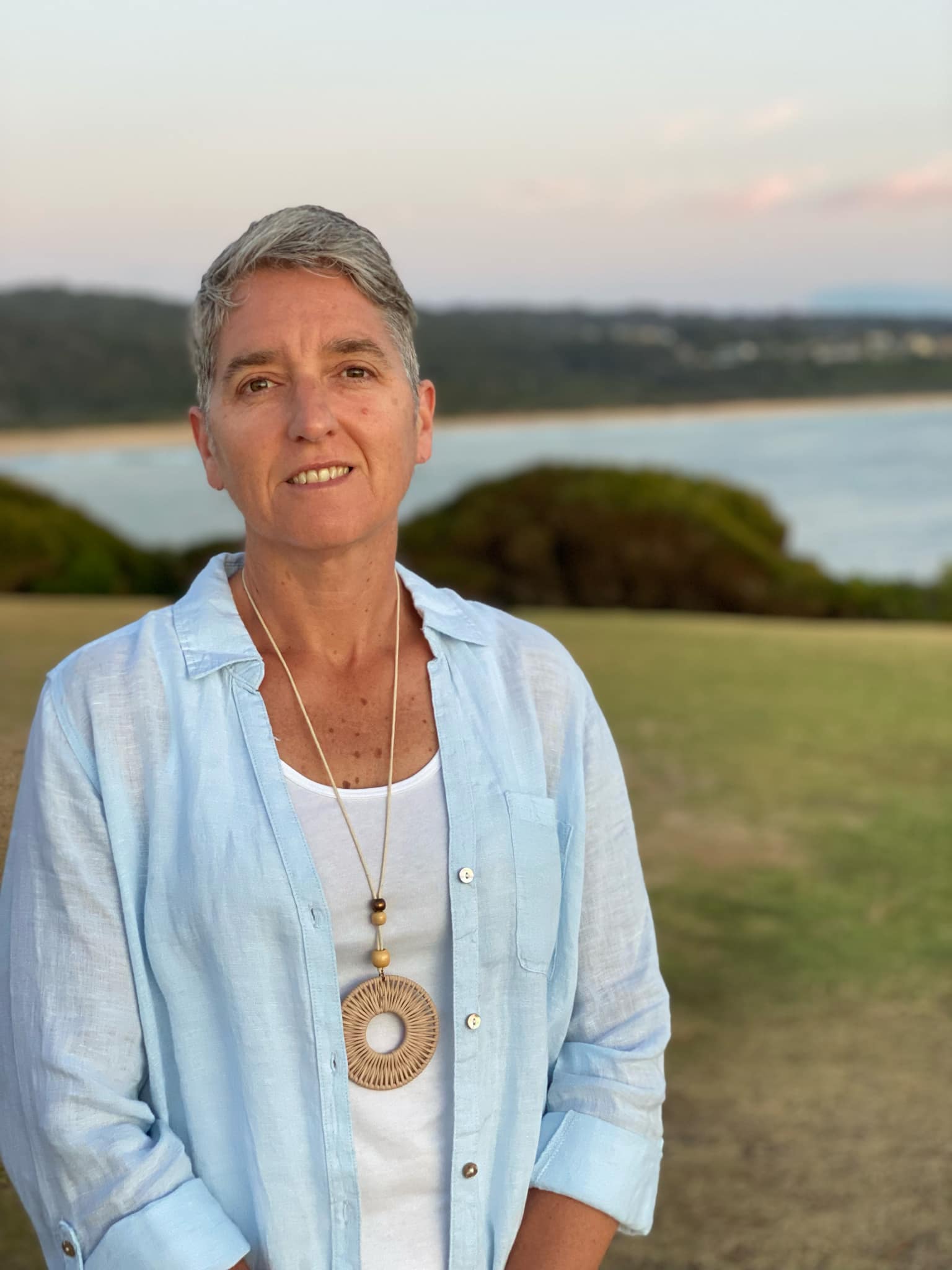
Ana Arcos SolariEmotional Health Coach
Helping you understand your emotions, recognise the patterns that influence your life, and create space for meaningful change.



Comments